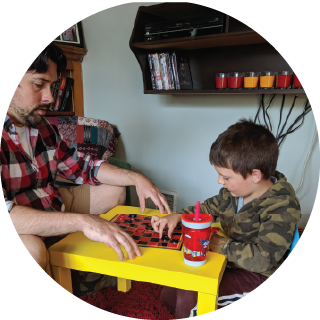

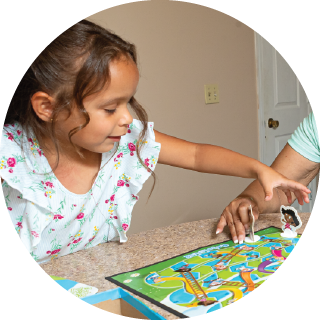
When your child plays Chutes and Ladders, they’re doing more than just spinning and counting. They’re learning about sequencing, cause and effect, and how actions can lead to different outcomes. The game can also help children experience randomness and probability in a playful way.
They also practice taking turns and managing emotions, both important for developing persistence and resilience in problem solving.
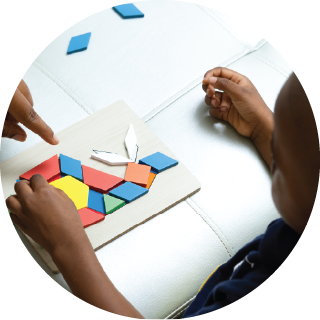
Exploring with pattern blocks encourages children to notice shapes, symmetry, and how smaller parts come together to form a whole—ideas central to both math and science.
As they try to replicate or invent patterns, children engage in visual-spatial reasoning and experimentation. They make predictions, test combinations, and adjust their designs, using many of the same habits of mind scientists use when making models and testing their ideas.
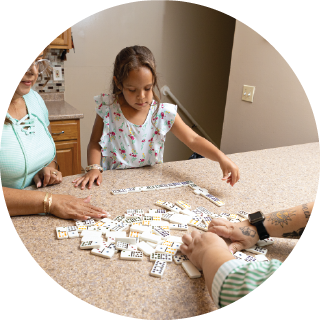
Lining up and playing with dominoes builds logical thinking, strategic planning, and attention to detail. Whether your child is matching numbers or creating long chain reactions, they are developing skills like comparison, classification, and understanding cause and effect.
Playing dominoes also strengthens fine motor coordination and perseverance, as they revise their plans and adapt when something doesn’t go as expected—just like in real-world problem solving.
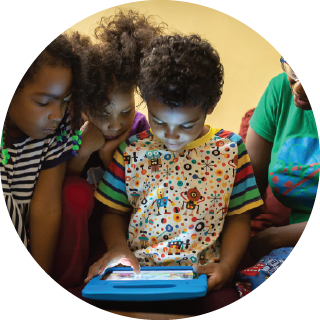
Digital games on tablets or phones can support young children’s learning—especially when families play and talk together. Thoughtful games build skills like problem-solving, memory, spatial reasoning, and early literacy. encourage exploration over rote answers. When families join in, screen time becomes a chance to connect and think together. Look for games that are age-appropriate, ad-free, and spark curiosity. If it gets you thinking and talking, it’s probably a good choice for your child too.
I added these as examples, but feel free to swap in other examples of digital games.