
Being outdoors also presents new ways to engage. For example, you might:
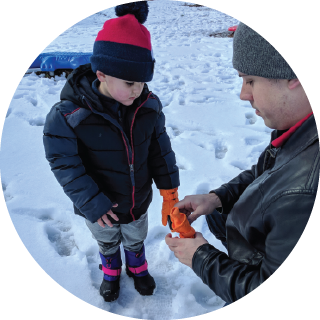
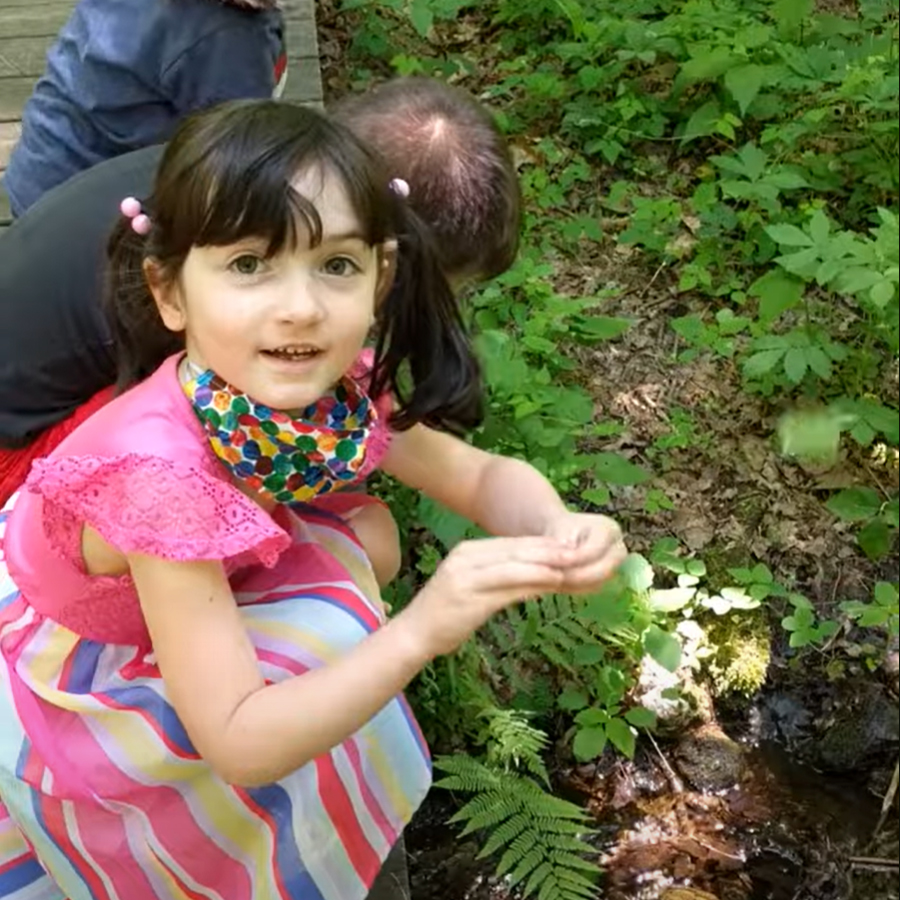
Exploring a pond gives children a chance to observe real-life examples of habitats, movement, and how living things interact with their environment. Children can crouch near the water’s edge and watch how tadpoles wiggle or how insects skate across the surface. They might notice the shapes of leaves floating by or the sound of frogs calling from the reeds.
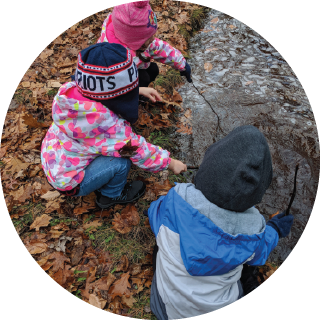
Families can wonder aloud together: Why do lily pads float? Where do frogs go when it gets cold? Watching how ripples move, spotting tiny fish, or comparing wet and dry rocks helps children engage their senses and build observation skills.
These simple, shared moments at the pond can spark curiosity and lasting memories.
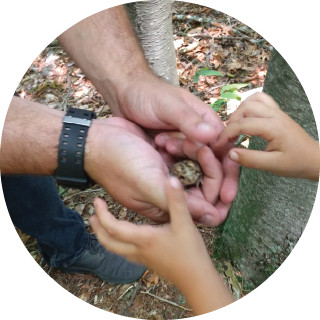
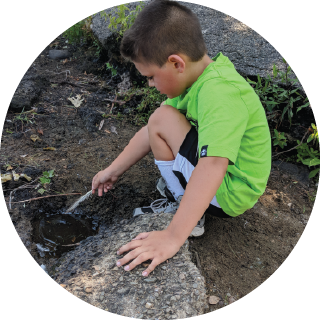
When children run their hands over rough, smooth, or crumbly rocks, they begin to notice that not all rocks are the same. They might ask questions like, Why are some rocks shiny? or Where did this rock come from? These observations open the door to early ideas about erosion, layering, and the Earth’s history. Simply collecting or sorting rocks by color or texture can spark wonder and close observation.
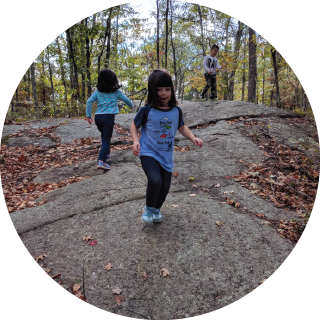
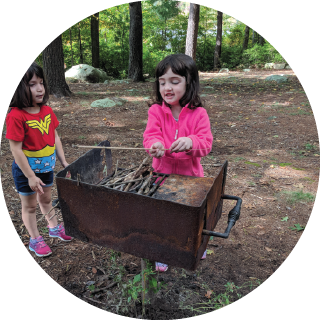
Collecting wood invites children to notice differences in size, shape, and flexibility. They may start to wonder why some twigs snap while others bend, or what kinds of trees they came from. Twigs also provide materials for creative building and imaginative play, helping kids connect natural materials to structure and design. Along the way, they build vocabulary and begin to recognize patterns in the plants around them.
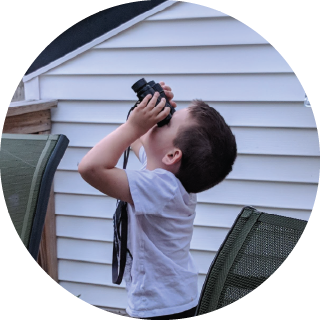
Looking up at the sky encourages children to notice clouds, shifting light, and the movement of the sun and moon. They might ask why clouds change shape, or how birds fly across such a wide space. These questions lead to early thinking about weather, time, and space. Sky-watching helps children develop a habit of noticing the world beyond their immediate surroundings.