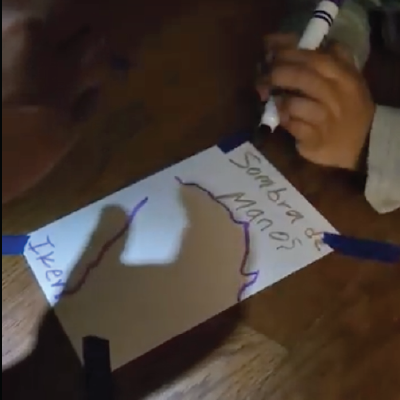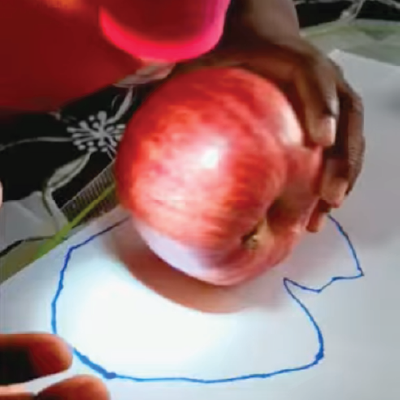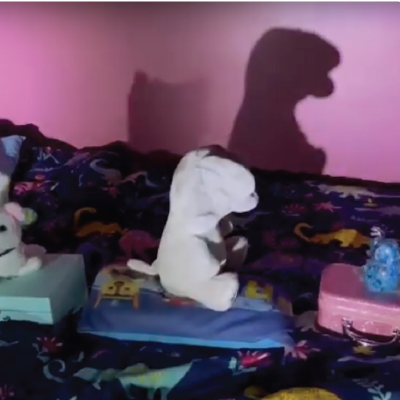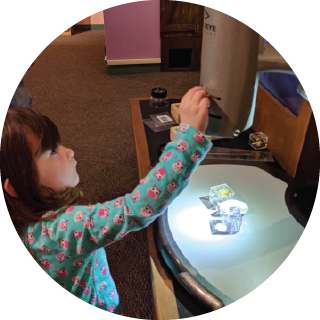

Tracing shadows is a simple and powerful way for children to explore how light and objects interact. As they observe how shadows change shape, size, or position throughout the day—or when they move a light source—they begin to build an understanding of cause and effect, perspective, and the movement of the sun. This hands-on activity encourages careful observation, prediction, and creative thinking—core skills in science learning.
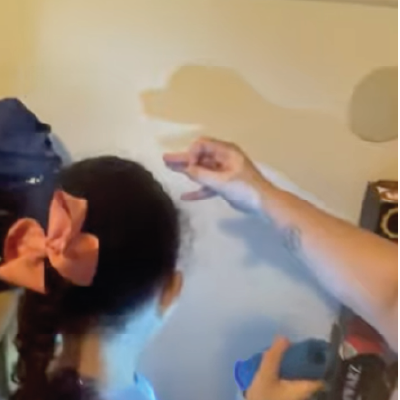
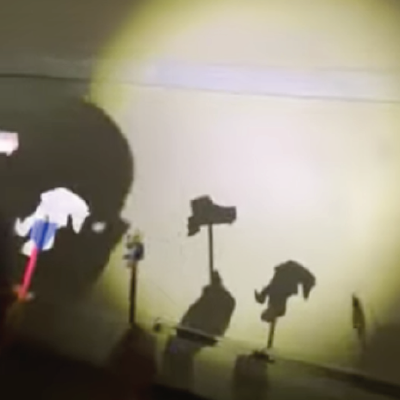
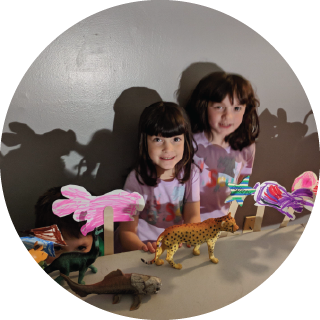
Making shadow puppets encourages children to experiment with light, shapes, and movement in a creative, hands-on way. As they adjust the distance between the puppet and the light or change the angle of the light source, they notice how shadows grow, shrink, and shift. This playful activity supports spatial reasoning, observation skills, and an early understanding of how light travels and interacts with objects.
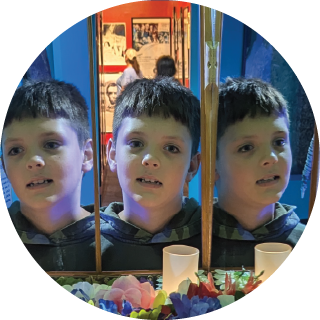
Exploring reflections with mirrors invites children to observe how light bounces and how images appear, reverse, or shift. As they tilt mirrors, look at objects from different angles, or create simple mirror mazes, they begin to notice patterns and ask questions about how and why reflections happen. These experiences nurture curiosity and help build foundational concepts about light, symmetry, and perspective.
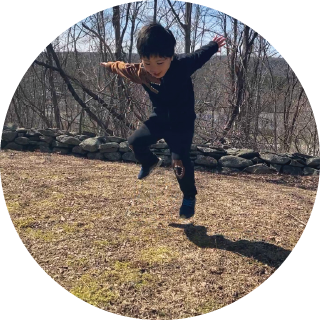
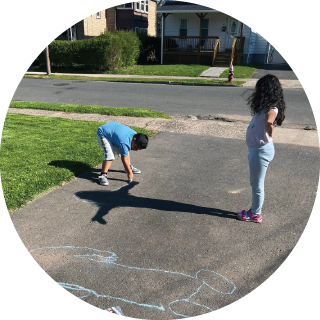
When children dance outside and watch their shadows move, they begin to make connections between their bodies, light, and the surfaces around them. As they leap, spin, or pause, they can see how the shape and size of their shadow change depending on the angle and speed of their movements. They might notice how different surfaces—like grass, concrete, or walls—affect how clearly their shadow appears. Dancing at different times of day also reveals how the sun’s position shifts the length and direction of their shadow.